PCKT Go Design Challenge Case Study
What is the Challenge?
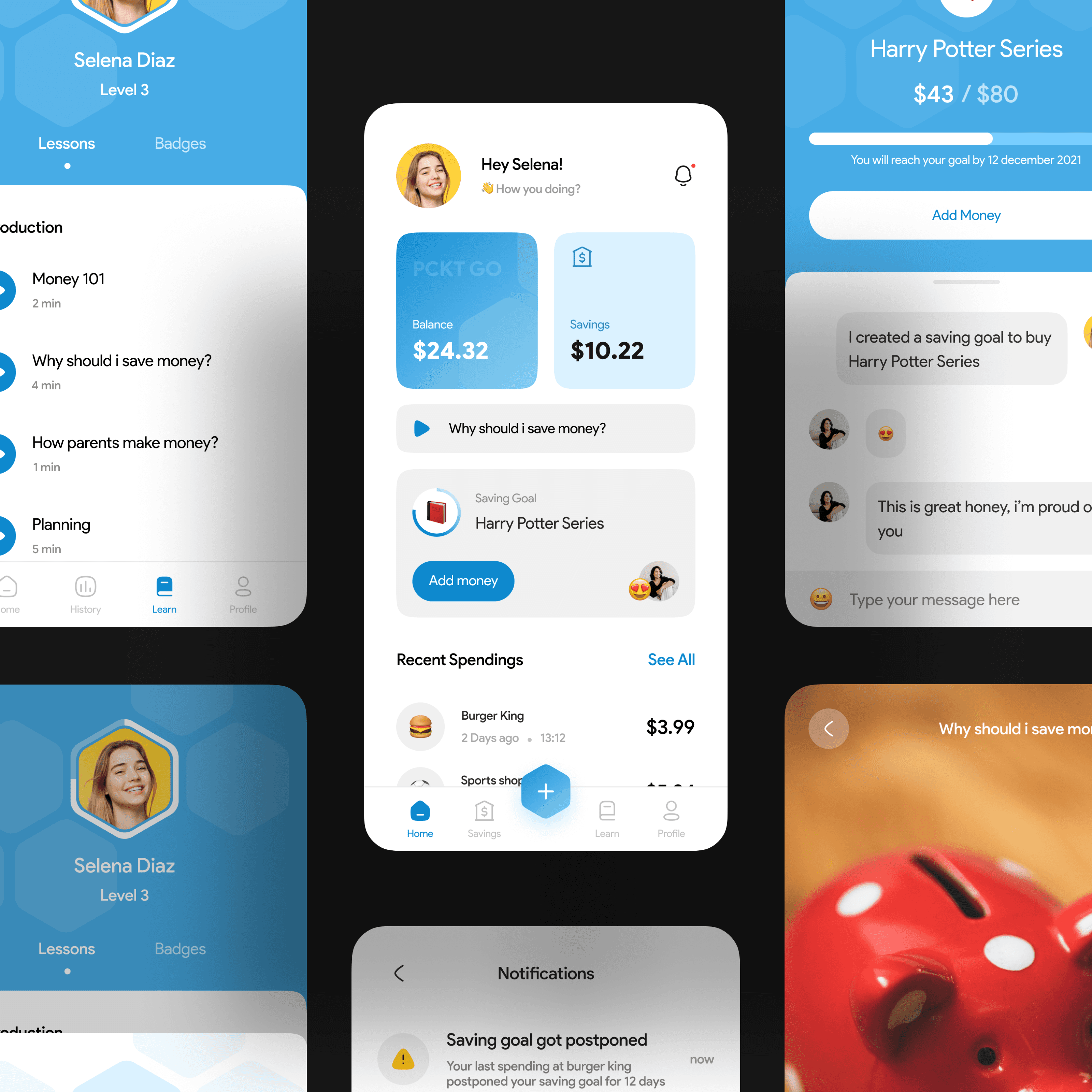
Design a mobile app (PCKT Go) that fosters financial responsibility and budgeting skills in children, while providing parents with control and transparency.
Target Users:
Parents: Seeking a tool to manage children's allowances and teach them valuable financial habits.
Children (aged 8+): Wanting more independence and responsibility with their money.
Core functionalities:
Allowance Management: Parents can easily set up and automate weekly allowance deposits.
Real-time Balance: Children can view their current account balance and track their allowance history.
Saving Goals: Encourage children to save towards specific goals by creating designated savings pockets within the app.
Spending with a Prepaid Card: Link a prepaid card to the child's account for safe and controlled spending in real-world scenarios (parental approval required for purchases).
Goal-oriented Allowance Distribution: Allow children to partially allocate their allowance towards savings goals upon receiving payments.
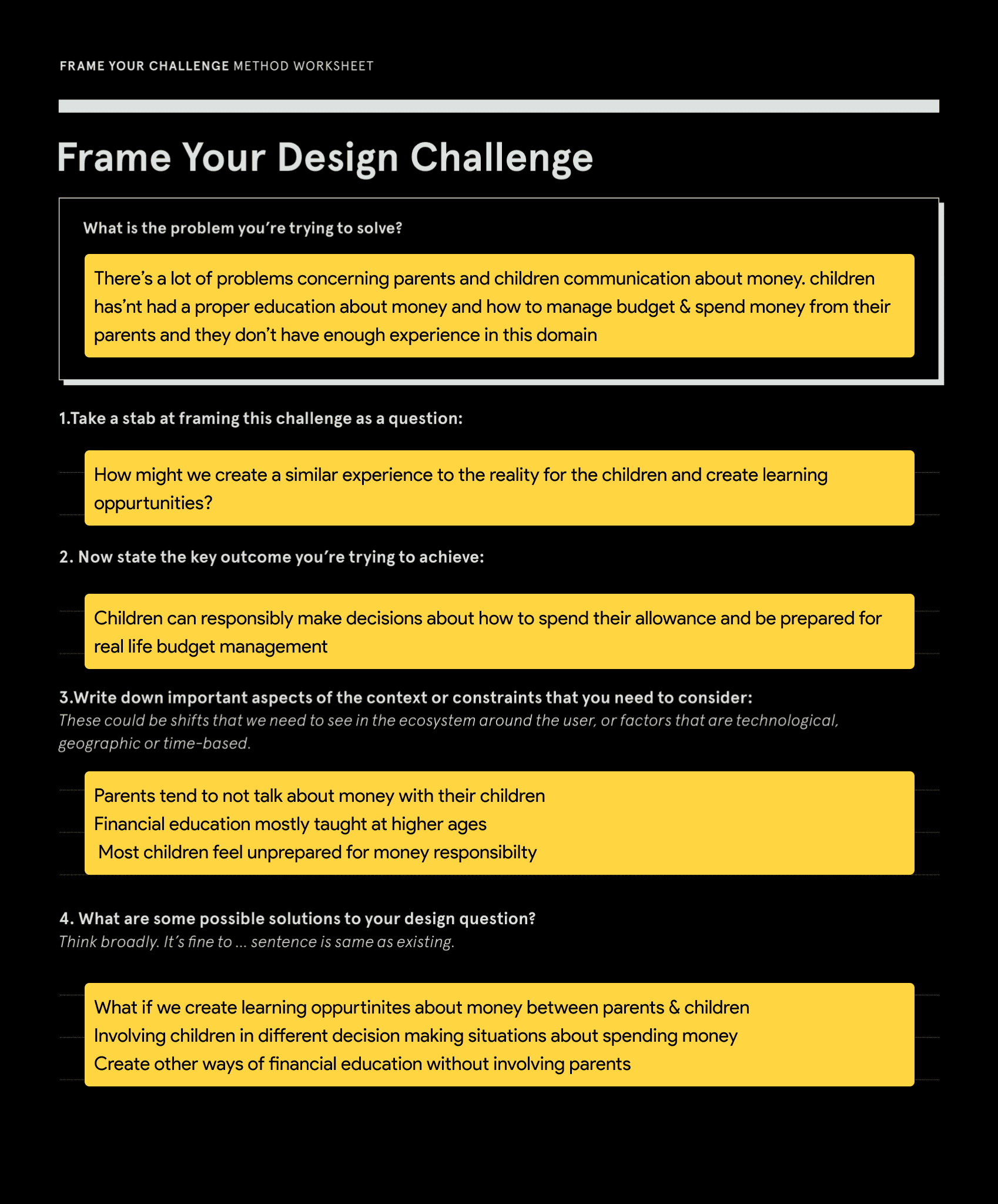
Framing The Design Challenge
In order for the design challenge to articualte the problem, first we should define the scope of the problem.
Data Gathering
I started to read about the problem. Case studies & Academic Articles were my source for getting insights and inspiration about the problem. These information helped me to get a better grasp of the matter in a short period of time.
By age 7, most children can set goals and are open to input on how to achieve those goals
Childhood ability to delay gratification is linked to success into adulthood.
66% of parents have some reluctance to discuss money matters with their 8- to 14-year-old kids.
21% of parents are very or extremely uncomfortable discussing money with kids.
88% of young adults who received financial education in school occasionally or frequently rely on it.
64% of young adults agree with the statement, “Once I had to start dealing with real-world finances, I was surprised at how little I knew about managing money.”
78% of young adults who had financial education in school took it in the 12th grade or later.
7% of parents of 8- to 14-year-olds indicated that their kids have credit cards.
Only 15% of parents discuss money matters at least weekly.
User Interview
The next step for me was to get first hand data from the Parents about their financial relationship with their chilldren and their perception of the concept of money and their financial habits. in a real project i would’ve also interview children in order to get to know them better but i had recruitment limitations in this assignment.
I interviewed 2 parents and focused the interview on these topics:
The money related conversations with their kids
Children’s financial habits & their perception of money
Challenges in the financial realtionship
Children’s decision making patterns in spending money

Insight statements
After reading all the insights we can summarize them like this:
From an early age i made a saving account & gave my kid a credit card
I help my kid to buy the stuff he needs and chip in often
I sometimes have issues with my kid’s proirities and limit how she can spend money
we provide him with the money for games and he decides how to spend that money
He expresses his concerns and make financial decisions based on that concerns
I let my kid to spend money how she likes and learn from her mistakes
I want my kid to learn budget management in order to use this skill in the future
Data assimilation
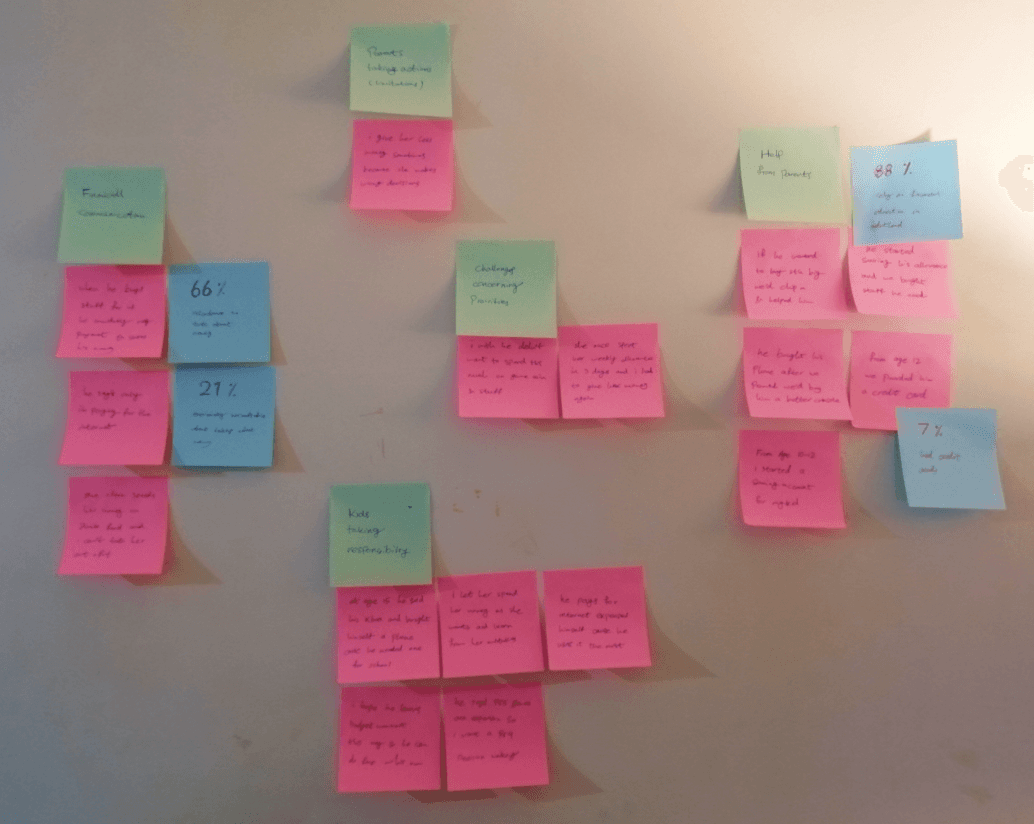
The next step would be analyzing the quantitative and qualitative data from the interviews. i tend to align the quantitative data with the qualitative data to help me reach better solutions. in this step i find the problems i should solve.
Data Categories:
Financial Communication
Actions Parents take to control financial management
Challenges concerning Priorities
Help from parents
Kids Taking responsibilty
Defined Problems
Once I had all the data collected and analyzed, I turned my attention to these key areas:
Lack of communication between child and parent
Lack of habit making for children from parents
Children irresponsible decisions
Lack of learning oppurtunities & hands on learning
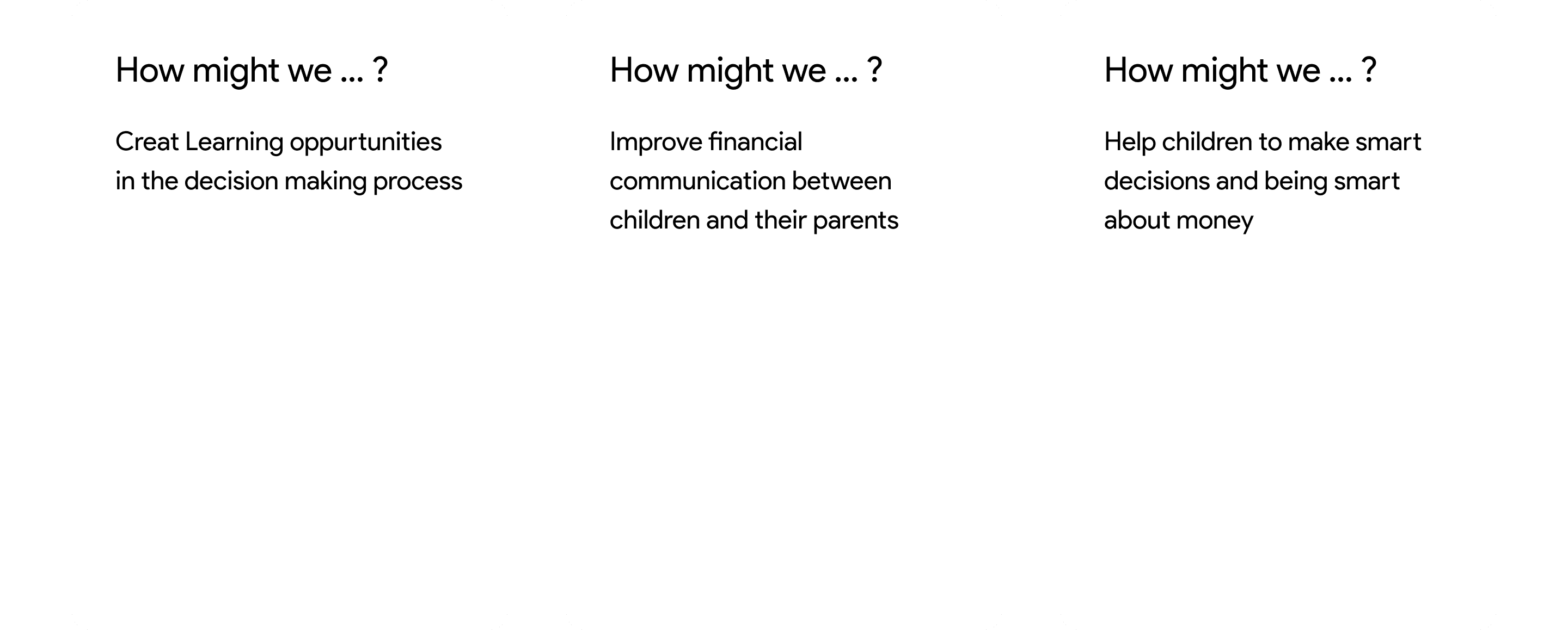
How might we?
In this step i asked some HMW questions and chose 3 of them that had the best value proposition in my opinion
Ideation
In this step i started to answer HMW questions and brainstorming on solutions and see wether or not are they feasable and viable, however it’s better to do this step with the product team and check every aspect of the solutions
User Stories
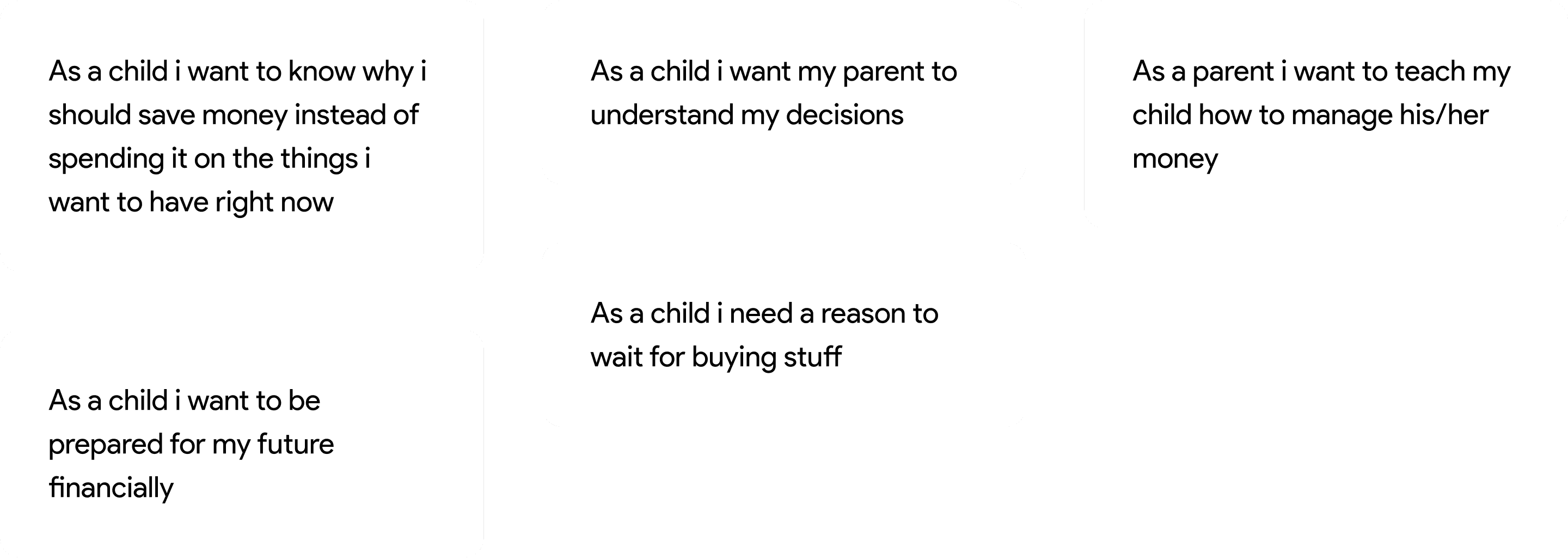
I started to write user stories based on children needs and goals. it’s also necessary to keep parents’ expectations and needs in the process
User-flows
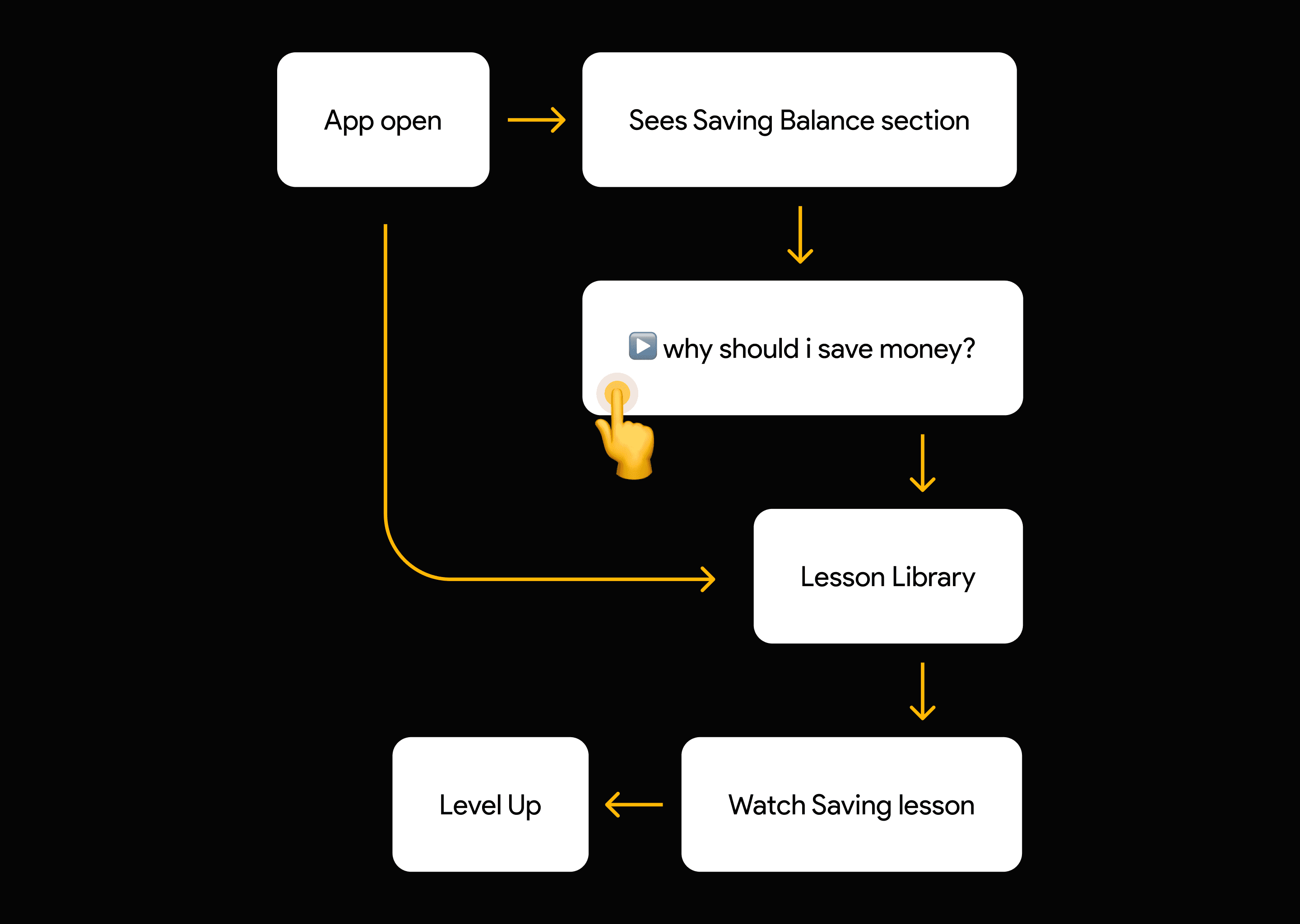
Financial education Solutions:
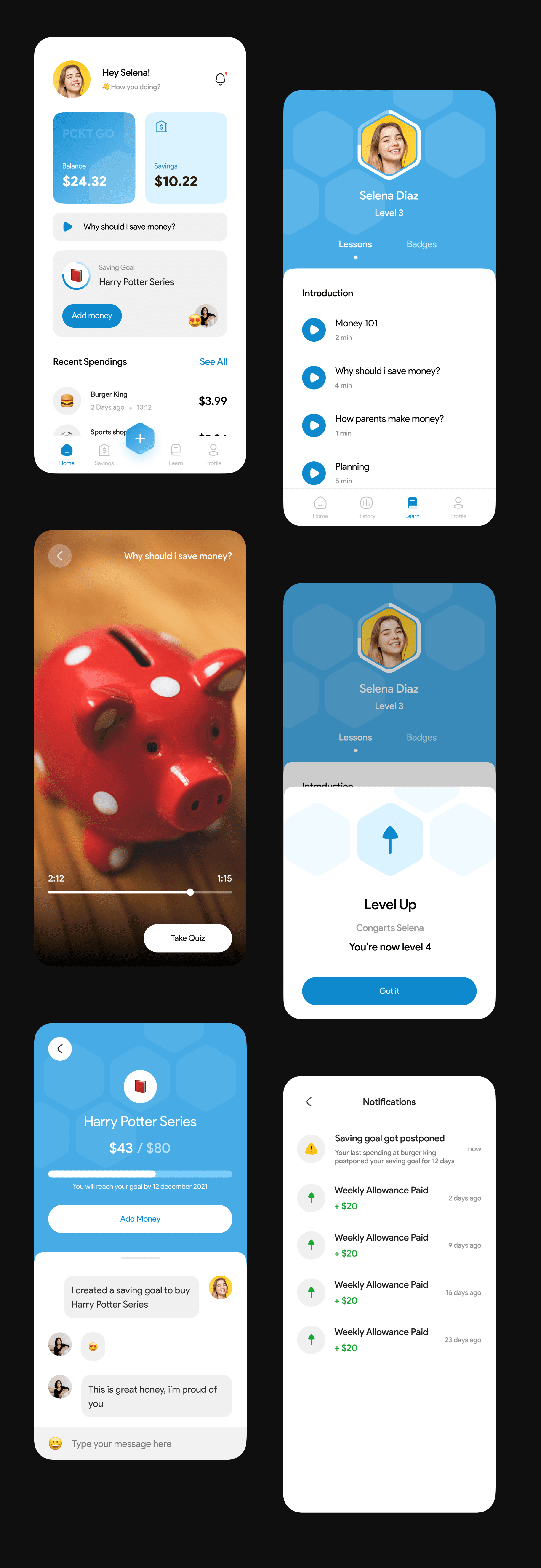
Creating a lesson library with a gamified progress system
giving access & incentives to the child in appropriate touchpoints
Parents initating the saving by putting some money in savings or creating a saving goal
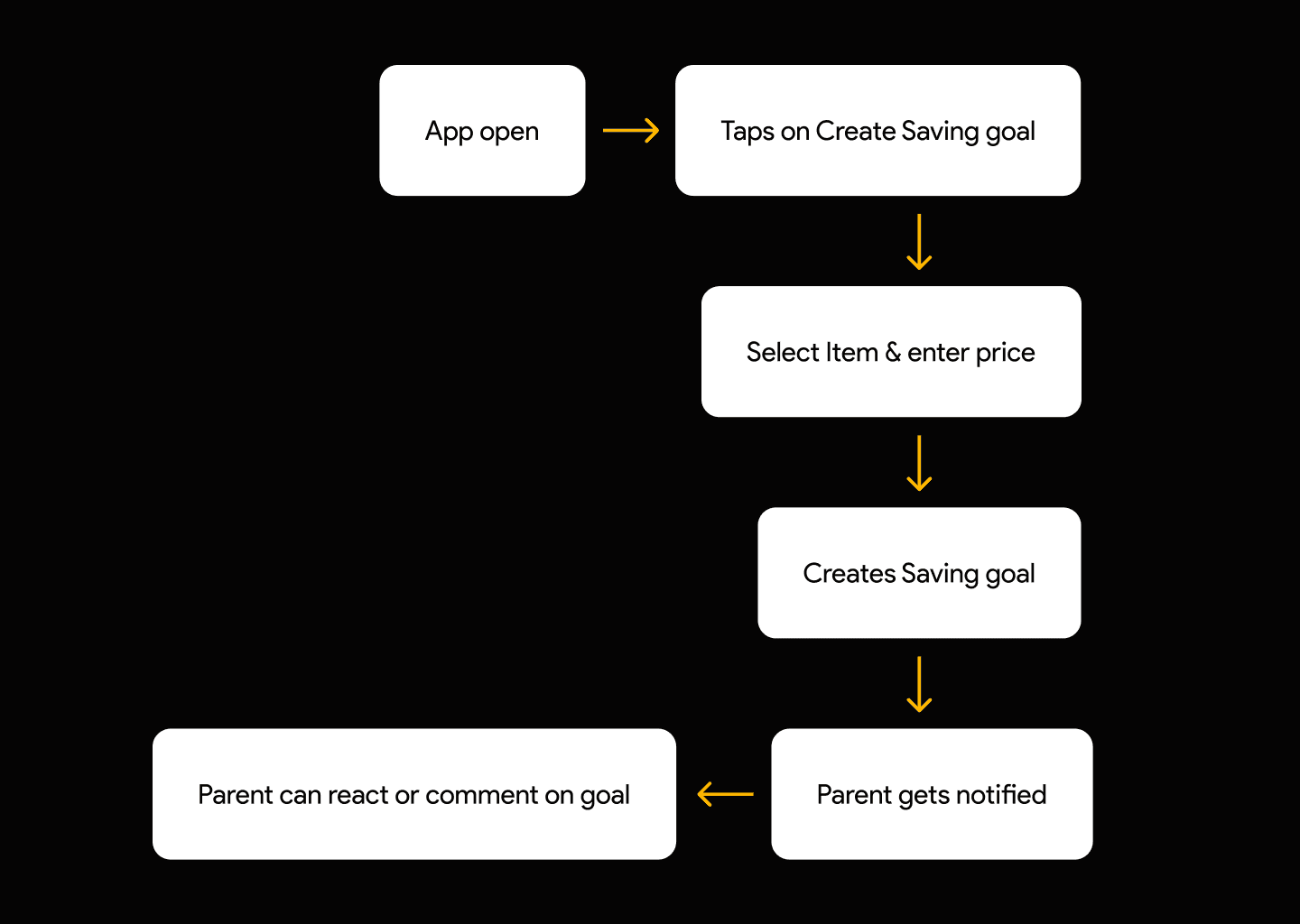
Financial Communication Solutions:
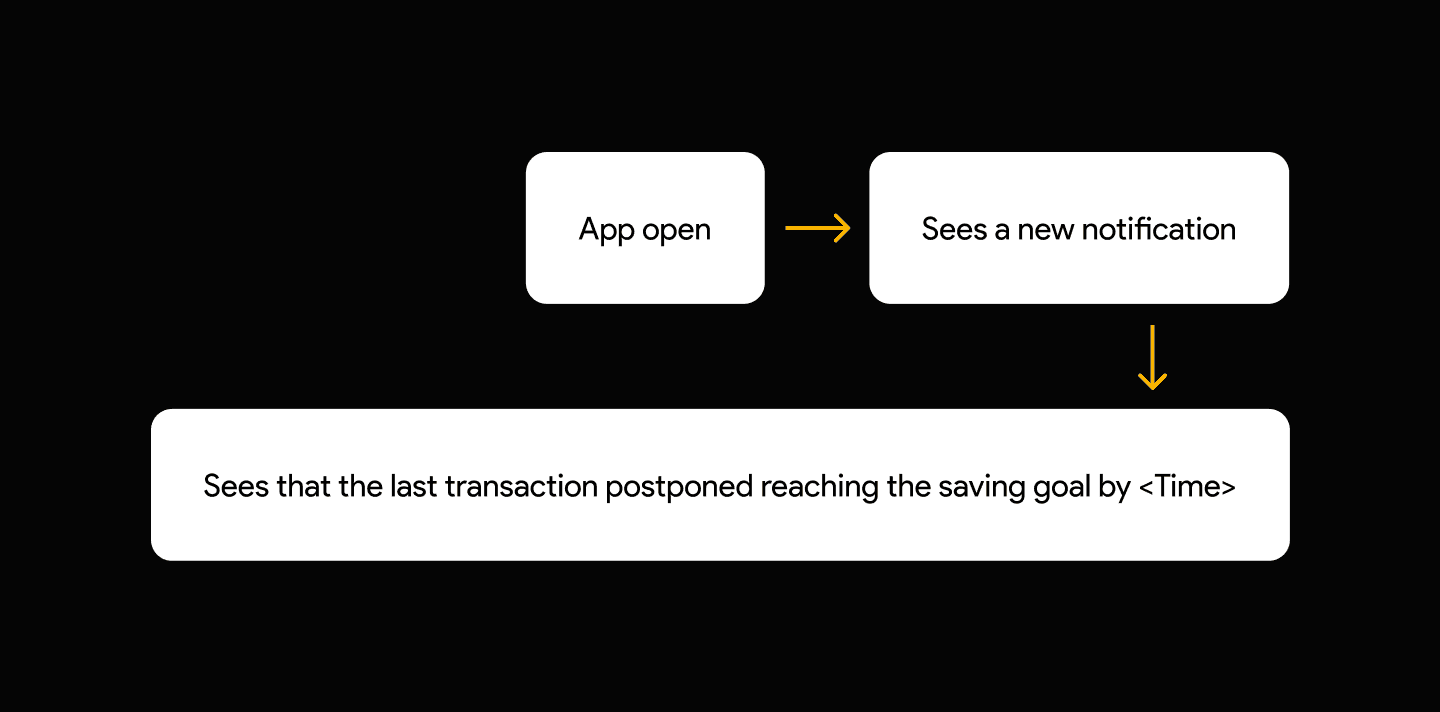
Creating a line of communication with parents in appropriate touch-points e.g. in setting saving goal process & Transaction log
Child can engage in a decision making process (what he/she wants to save for)
Financial Responsibility Solutions:
Everytime the child wants to spend money above some threshold she gets notified that it made it harder to achieve his/her saving goal